
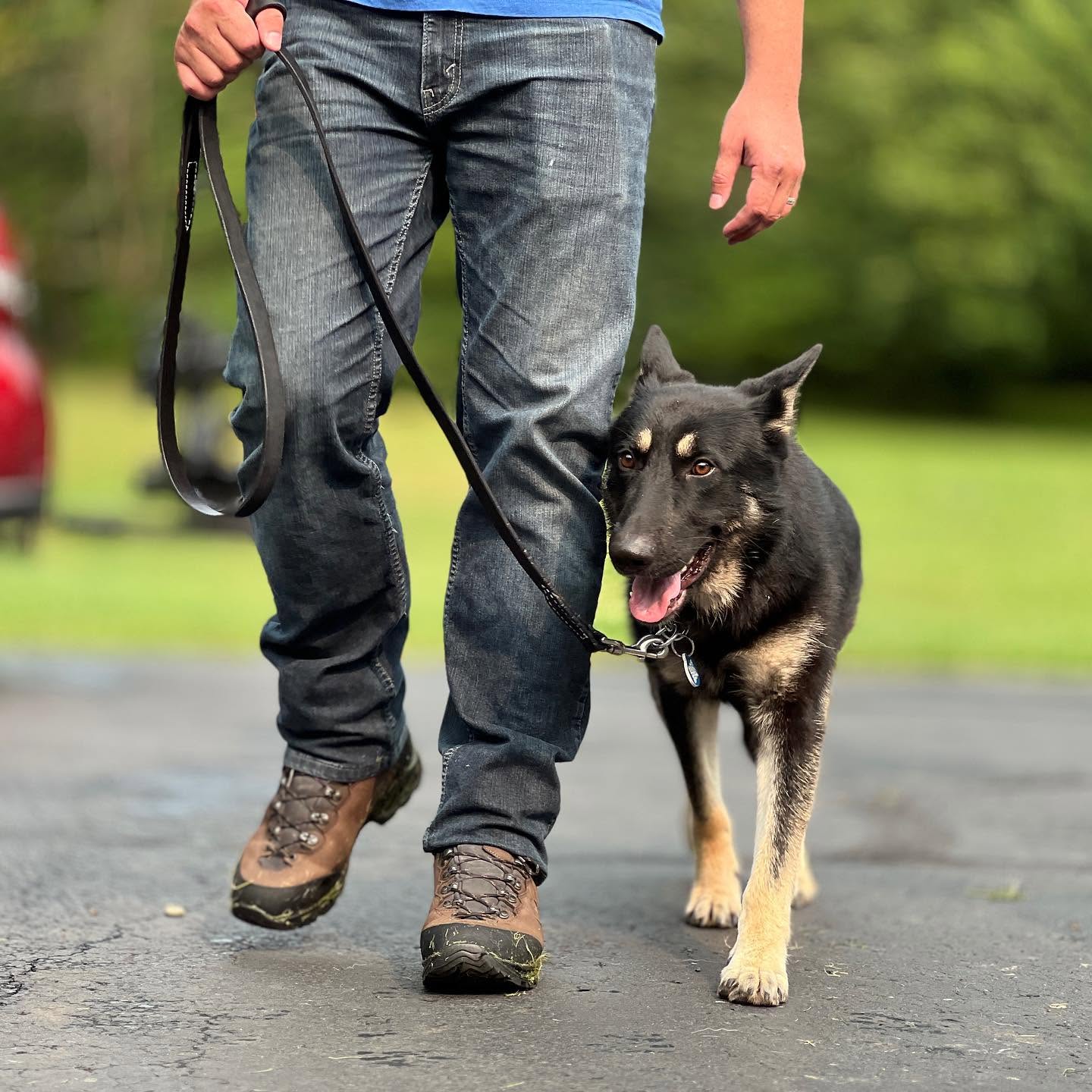
Imagine stepping out your front door for a sunny afternoon stroll, feeling entirely relaxed as your companion walks calmly by your left side. There is no shoulder-straining tension, no frantic crisscrossing on the sidewalk, and no constant tug-of-war over every light pole, neighborhood cat, or passing dog.
For many dog owners—whether you are navigating the energetic outbursts of a growing puppy, managing an easily distracted adult dog, or working through the uncertainty of a newly adopted rescue—the daily walk often feels more like a stressful physical workout than a peaceful bonding ritual.
When your dog constantly lunges or drifts ahead, your natural reaction is to reach out with your free hand, brace yourself, and hold the leash tight. But physically restraining your dog only triggers their natural opposition reflex, causing them to pull harder against the continuous tension.
At American Caniner, we transform chaotic walks into harmonious daily outings using a structured, lifestyle-focused protocol called Relaxed Heelwork.
What Is Relaxed Heelwork?
In competitive dog sports, heelwork is an intense, high-focus exercise where a dog stays glued to the handler’s knee while maintaining continuous eye contact. While impressive in a competition ring, that level of rigidity is neither practical nor necessary for a relaxing stroll through your neighborhood.
Relaxed Heelwork is designed for real life. It establishes a clear, functional frame where your dog walks comfortably on your left side without pulling on the lead, without sniffing or forging ahead, and smoothly comes to a sit whenever you stop.
It isn’t about rigid perfection; it is about establishing clear spatial awareness, mutual respect, and downshifting an over-aroused nervous system so your dog can focus on you.
Breaking the Tug-of-War Cycle
The secret to stopping leash pulling isn’t pulling harder—it is teaching your dog how to yield to light directional guidance. When you stop trying to physically hold your dog back and instead master dynamic movement mechanics, the entire dynamic changes:
-
Eliminates Physical Battles: Rather than fighting against your dog’s momentum, you use structured turns and quick leash resets to gently redirect their forward direction.
-
Encourages Active Focus: By making sudden, deliberate changes in direction, you motivate your dog to pay close attention to your body language and footwork rather than scanning the horizon for distractions.
-
Builds Mindful Manners: Practicing structured directional changes like the Right-About Turn helps your dog process physical guidance, smoothly turning moments of high arousal into quiet, attentive cooperation.
By mastering the core mechanics of Relaxed Heelwork, you give your dog the ultimate gift of clarity—showing them that walking calmly by your side is the most comfortable and secure place to be.
Is your dog a constant puller, a sidewalk zigzagged, or a relentless sniffer on the lead? Drop a comment below with your dog’s breed and tell us—what is your single biggest frustration when you clip on the leash? Let’s start mapping out your perfect, balanced canine lifestyle!